

About 3,600 years ago, the people of Israel were given this important instruction: they were to put the blood of the Passover lamb on their doorposts and just cozy up inside for the night, which took them anywhere between 15 minutes to an hour. It’s kind of like when we welcomed Jesus as our redeemer and invited His blood into our hearts—it kicked off this amazing journey for us!
That night, after they sacrificed the Passover Lamb and marked their doorposts with the blood, the people of Israel gathered in their homes to enjoy the roasted lamb. This meal symbolized the bond among believers, all united by the Lamb of God. It’s such a beautiful reflection of Psalm 133:1, which talks about the joy of being together in harmony. A key part of the whole ceremony was that blood on the doorposts, representing the salvation we find through Christ’s sacrifice. Jesus, our Paschal Lamb, took on our sins, allowing us to connect with God and each other, making Him the heart of our unity.
Jesus said in Matthew 18:30, “Wherever two or three come together in my name, there I am with them.” When we gather through the Holy Spirit, we keep our focus on Christ. These get-togethers are something special, all about glorifying Christ, not about names or systems. Jesus also mentioned in John 14:23, “If someone loves me, they will follow my teachings.” Our love for Jesus really shows when we’re willing to follow his commands. Those who are committed to God shouldn’t be chasing their own desires, as that can interfere with what God wants to do in us. Back during the first Passover, families came together around a roasted lamb, just like it says in Exodus 12:8-9. The roasted lamb symbolizes how Jesus, the true Passover Lamb, faced some tough times during his ministry. This detail mattered because Israel was instructed not to eat it raw or boiled.
You know, when it comes to enjoying the Passover lamb, it’s all about how we celebrate the antitypical Passover Lamb too. The Israelites were supposed to eat it with unleavened bread because leaven symbolizes evil and sin. The Feast of Unleavened Bread, which we see in Exodus 12:15, really showed Israel’s dedication to steering clear of sin. And then there’s the Apostle Paul, who tells us in 1 Cor. 5:7 to “Purge out therefore the old leaven”, pushing us to take a stand against sin. Sure, our human nature can sometimes hold us back, like it says in Romans 7:19-21, but we should keep striving to shake off sin and evil.
So, Israel had to do this for seven days, which symbolizes completeness. For Christians, it’s all about rejecting evil and living a holy life because God just can’t stand it. The Apostle John points out in 1 John 1:6, that if you say you’re close to God but are living in darkness, that’s just not true. He also mentions in verse 8, that if we deny our sins, we’re just fooling ourselves. Sure, our flesh might try to take over, but God’s grace is there to help keep it in check. If we own up to our sins, verse 9 says, He’s ready to forgive and cleanse us. We might stumble, but 1 John 2:1 tells us, we should turn to our Advocate, Jesus Christ, right away. While we’re aiming for perfection, we won’t really get there until we have our perfect bodies. John makes it clear in 1 John 5:18, that those who are born of God don’t just sin on purpose and turn their backs on sin.
You know, the Israelites were saved by the blood of the Passover Lamb, not just by eating unleavened bread. Similarly, Christians find their salvation through Jesus’ blood, not because they’re good enough on their own. But here’s the thing: if someone keeps on sinning, they really can’t connect with Jesus or feel that salvation. Everyone in God’s community is called to live a holy life, but it’s important to remember that salvation is all about grace, not about how holy we think we are.
The Paschal Lamb was something special, enjoyed alongside some bitter herbs. It really reminds us of the tough times that the LORD’s people faced and also makes us think about Jesus’ own suffering. There’s that saying in 2 Tim. 2:12, “If we suffer with him, we shall reign with him”. It was foretold that Jesus would take on our sins and bring us healing in Isa. 53:5. Paul mentioned in Heb. 13:12-13, how Jesus made people holy through his blood, and he encouraged us to embrace the challenges that come our way. Gal. 5:24 invites to share in that roasted lamb with those bitter herbs and, with God’s help, let go of our old ways. Just like Paul, we strive to keep our bodies in check (I Cor. 9:27) so we can hear those words of our Master recorded for us in Matt. 24:21 “Well done, thou good and faithful servant”. Just as Israel was ready to leave Egypt by eating the lamb quickly, we should keep our future as joint-heirs with Christ in mind. The staff symbolizes our trust in God for the journey, all made possible by the lamb’s blood. God unites us through Christ and guides us toward the Promised Land.
You know, the world usually throws big birthday bashes for its heroes, but it often forgets about how they left us. It’s funny because we celebrate their lives, but death is like the final chapter of their stories. But with Jesus, it’s a bit different—his death gets way more attention than his birth. Sure, a lot of folks love celebrating his birth, but he actually wanted his followers to remember his death, since that’s what really matters for redemption. His life was inspiring, no doubt, but it was his death that wrapped up his mission. Unlike others whose stories end with their passing, Jesus’ impact just grew because of his sacrifice. So, it’s important for his followers to honor his death; it gives them hope for life. The Scriptures really encourage Christians to embrace this sacrifice, reminding them that their ministry shines through their faithful service, even when facing death.
You know, the last days of Jesus’ life were really something special. He was aware of what was going down, but his disciples? They were pretty much clueless. A lot of folks in Israel totally missed the incredible importance of those moments. Jesus rolled into Jerusalem like the King and Messiah everyone had been waiting for, kicked out the money changers from the Temple, and had some deep talks about his Second Coming with his disciples on the Mount of Olives. He shared Passover with them, all while Judas was secretly planning to betray him. That led to his heartache in Gethsemane, the betrayal, the trials, Peter denying him, and ultimately, his crucifixion. For the disciples, it was a whirlwind of hope, confusion, and disappointment. Many Jews thought this was just the end of a false Messiah, taken care of by the authorities. But only Jesus really understood the gravity of it all, and that gave him the strength to keep going and complete his mission.
Jesus really wasn’t the go-to guy for the scribes and Pharisees. They were pretty much against him from the get-go of his ministry. Even though they put in a lot of effort to turn people against him, many folks genuinely appreciated his teachings and the miracles he worked. They could totally see his unique authority, like it says in John 7:46, and they were really touched by the healing of the blind man, who realized just how much he had transformed. Others, like lepers, people with disabilities, and those who were possessed, also felt his compassion. Sure, not everyone fully understood his messages, but they knew he had positively impacted their lives. Because of that, a lot of people in Israel rallied around Jesus and pushed back against the scribes and Pharisees’ attempts to take him down, all while being looked after by his Heavenly Father until the right time for his sacrifice (I Tim. 2:6).
While Jesus was out there sharing the Gospel and performing miracles, his disciples really started to believe he was the Messiah. At first, they thought he might be the one they were waiting for, but as they witnessed his incredible acts and listened to his teachings, their faith just kept growing. I mean, Peter even said he’d be ready to die for Jesus! But let’s be real, the disciples were just ordinary folks, and they weren’t quite prepared for the abrupt end of Jesus’ ministry. So when Jesus brought up his impending death, Peter just couldn’t wrap his head around it. Jesus told him that those who try to cling to their lives will end up losing them, but those who let go for his sake will actually find true life. It’s a pretty mind-boggling concept for the disciples, and honestly, it still has people scratching their heads today. Jesus really demonstrated this idea by sacrificing his earthly life, which opened up the path to salvation for everyone. His death was such a powerful act of love and serves as a beautiful example for us, reminding us to prioritize others while keeping in mind the significance of his sacrifice as our Redeemer.
So, after the Holy Spirit showed up at Pentecost, the disciples finally started to get what they had been missing before. Sure, they didn’t understand everything Jesus was teaching, but they were all in as his followers. They even found a young donkey for his big entrance into Jerusalem, all hyped about the Messianic kingdom coming. Jesus was healing the sick in the Temple and tossing out the money changers, which really got them fired up! But then he threw them a curve ball by talking about the Temple’s destruction, making it clear they still had a lot to learn about his plans. Later, while they were hanging out on the Mount of Olives, they asked Jesus about his Second Presence and when the kingdom would kick off, sensing he might be away for a bit. His long answer was packed with prophecies about the end of the age, but honestly, it didn’t really prepare them for what was coming next, as they struggled to wrap their heads around those spiritual truths.
The disciples were feeling a little on edge as they gathered in the upper room for Passover, sensing something was off. Jesus dropped a bombshell, saying one of them would betray him, which led to the anxious question, “Master, is it I?” Even though he knew it was Judas, he still called him “friend.” Meanwhile, the disciples were wrapped up in their own importance in Jesus’ kingdom, debating who among them would be the greatest. In a touching moment, Jesus washed their feet, showing them that real greatness is all about serving others. He also asked about swords, and when he found out there were two, he said that was enough. It might seem a bit odd given his peaceful nature, but it hinted at his acceptance of what was coming. When Peter tried to defend him with one of the swords, Jesus healed the High Priest’s servant, making it clear he didn’t want anyone to suffer for him, even as he prepared to make the ultimate sacrifice for everyone.
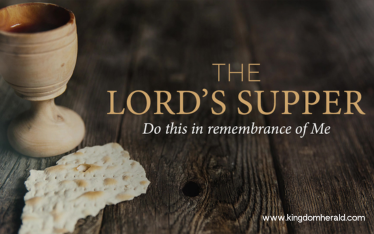
So, there was Jesus and his disciples, hanging out in the upper room for the Passover dinner on the fourteenth of Nisan. They were celebrating that incredible night in Egypt when the blood of the first Passover lamb saved the Israelites. God really wanted them to remember that amazing rescue every single year. The Passover lamb was like a sneak peek of the even bigger sacrifice of Jesus, the “Lamb of God,” who would take away everyone’s sins. During this last Passover, Jesus brought in something new, saying that the bread represented his broken body and the wine stood for his shed blood. He invited his disciples to dig into this meal to remember his death. This gathering wasn’t just another Passover; it was a heartfelt memorial of Jesus’ sacrifice. The disciples probably didn’t completely get the deep meaning behind the bread and wine or why Jesus’ death was such a big deal for their salvation and future with him. The bread and wine also symbolized the blessings of life and the amazing chance to share in Christ’s suffering and death.
So, after Jesus set up that memorial for his death, he and the disciples headed from the upper room to Gethsemane. You could tell the Master was really feeling it, while the tired disciples were chatting away as they walked. Peter, being bold as ever, declared he’d die for Jesus, even if everyone else bailed. Once they got to the Garden, Jesus asked Peter, James, and John to pray with him, but they just couldn’t keep their eyes open. He went a little further to pray alone, really pouring his heart out, saying, “If it’s possible, let this cup pass from me; yet not my will, but yours be done.” Jesus was all in on doing what the Father wanted, fully aware he’d be hit with accusations of blasphemy and treason, even though he was good. He took on the role of the world’s Redeemer, feeling comforted by the Father’s approval. Dying didn’t scare him; it was the thought of being eternally separated that troubled him. But he found peace knowing his Father was proud of him. In those tough moments, he didn’t have much human support; his closest friends just couldn’t grasp what he was dealing with. Still, the Heavenly Father was right there, giving him comfort and strength. Jesus knew he could call on twelve legions of angels for protection if he needed it.
As Jesus and his disciples were leaving Gethsemane, they bumped into the crowd that had come to arrest him. He didn’t hold back; he told them exactly who he was, even though Judas had already betrayed him and Peter was trying to defend him, but in a not-so-great way. They took Jesus to the High Priest Caiaphas, who asked him if he was the Christ. Jesus didn’t hesitate to confirm it, knowing full well it would lead to his death. That strong sense of self, kept him steady in front of the High Priest, standing up for the truth no matter what. Jesus showed us how crucial it is to stand up for the truth ourselves.
So, the Master was brought in front of Pilate, who was acting on behalf of Caesar and decided to dismiss the religious charges against Jesus. The Jews were saying he claimed to be a king, which Pilate thought could be a problem for Caesar. But even with all those accusations, Pilate couldn’t find a solid reason to condemn him and really wanted to let Jesus go. However, the crowd was insistent on having him executed. Jesus did acknowledge that he was a king, saying he was born for this purpose, but he didn’t try to gather an army or anything; he even stopped Peter from using a sword. Instead, he chose to give up his life for humanity. They mocked him, put a crown of thorns on his head, and nailed him to a cross, with Pilate labeling him “King of the Jews.” While the crowd was challenging him to prove his divinity, Jesus stood his ground, knowing his death was for everyone’s salvation. His last words showed his trust in God, wrapping up his mission. Followers of Christ are invited to share in his suffering and remember his death, viewing it as the basis of their salvation. Every year, many gather to honor his sacrifice and renew their commitment to follow him. Jesus confirmed who he was before the High Priest, highlighting how important it is to stand up for the truth.
Picture this: on the evening of the fourteenth of Nisan, way back over a thousand years before Christ showed up, Egypt faced a really heartbreaking moment when every family’s firstborn passed away. There was no media back then to spread the word, so families were so caught up in their own grief that they barely noticed the pain around them. The death angel didn’t discriminate; it took the king’s firstborn and the simplest Egyptian alike. This old story is becoming more significant for God’s people. It’s not just about the losses in Egypt; what really counts is the salvation of Israel’s firstborn. That night marked a huge change for them, leading to freedom from death, and the next day, they broke free from Egyptian slavery. Every year on the fourteenth of Nisan, thousands of the LORD’s followers gather to remember their hope for deliverance as the symbolic “church of the firstborn” and celebrate the promise of freedom from sin and death.
This background really highlights just how crucial the Lord’s Memorial Supper is for those of us embracing the present truth. It reminds us of how the firstborn of Israel were saved during Passover by following the LORD’s instructions through Moses, which meant putting the blood of the Passover lamb on their doorposts. Families that didn’t do this faced the same fate as the Egyptians. Now, while the lamb’s blood itself didn’t have any saving power, it beautifully pointed to the salvation that Jesus offers us. When John the Baptist said, “Behold the Lamb of God, which taketh away the sin of the world,” it really hits home. The sting of death began in Eden, and it was only through the shedding of Jesus’ blood—rather than that of lambs or goats—that it could be taken away, as He became the perfect substitute for the life that Adam lost.
For over three years, after John sweetly called him the “Lamb of God,” Jesus was all about getting ready for his big sacrifice as the Passover Lamb. This was crucial for saving both the church and the whole world. The night before he was set to die, he got together with his disciples in an upper room to share the Passover feast one last time. After they ate, he brought in something new, using bread and wine to symbolize his body and blood, which he was going to give for them. It was a lovely shift from the usual Passover, pointing right to his sacrifice. Jesus really wanted this new way of remembering to help his followers think about his death and the special connection they had with him as the ‘church of the firstborn.’ Reflecting on his sacrifice should fill us with gratitude for God’s love and Jesus’ steadfast faithfulness. By embracing Jesus and taking part in the Memorial emblems, we show our commitment to his will and our calling to lay down our lives in sacrifice, just like he did.
The Apostle Paul really hits home when he talks about how sharing in the bread and cup is such a meaningful way to connect with Christ’s sacrifice. It’s like a reminder of our unity in his suffering and death. This should really motivate us to serve with joy, knowing that our struggles alongside him open up the incredible chance to live and reign with him as recorded in Rom. 8:17,18. And, as we get ready to celebrate the Memorial, let’s really hold onto the freedom it symbolizes, kind of like the Exodus from Egypt, and appreciate the safety we find in Christ’s sacrifice. Reflecting on Jesus’ suffering and the tough times he went through should really encourage us to stick to our faith, no matter what challenges come our way. We’ve got to commit to walking his path of sacrifice and suffering, trusting that the Lord has our backs. Living each day to the fullest will inspire us to keep our promises and focus on what really matters spiritually. May every Memorial Supper bring us closer to the Lord and help us appreciate his sacrifice and its importance for everyone.