

“Neither pray I for these alone, but for them also which shall believe on me through their word; that they all may be one; as thou, Father, art in me, and I in thee, that they also may be one in us…” — John 17:20, 21
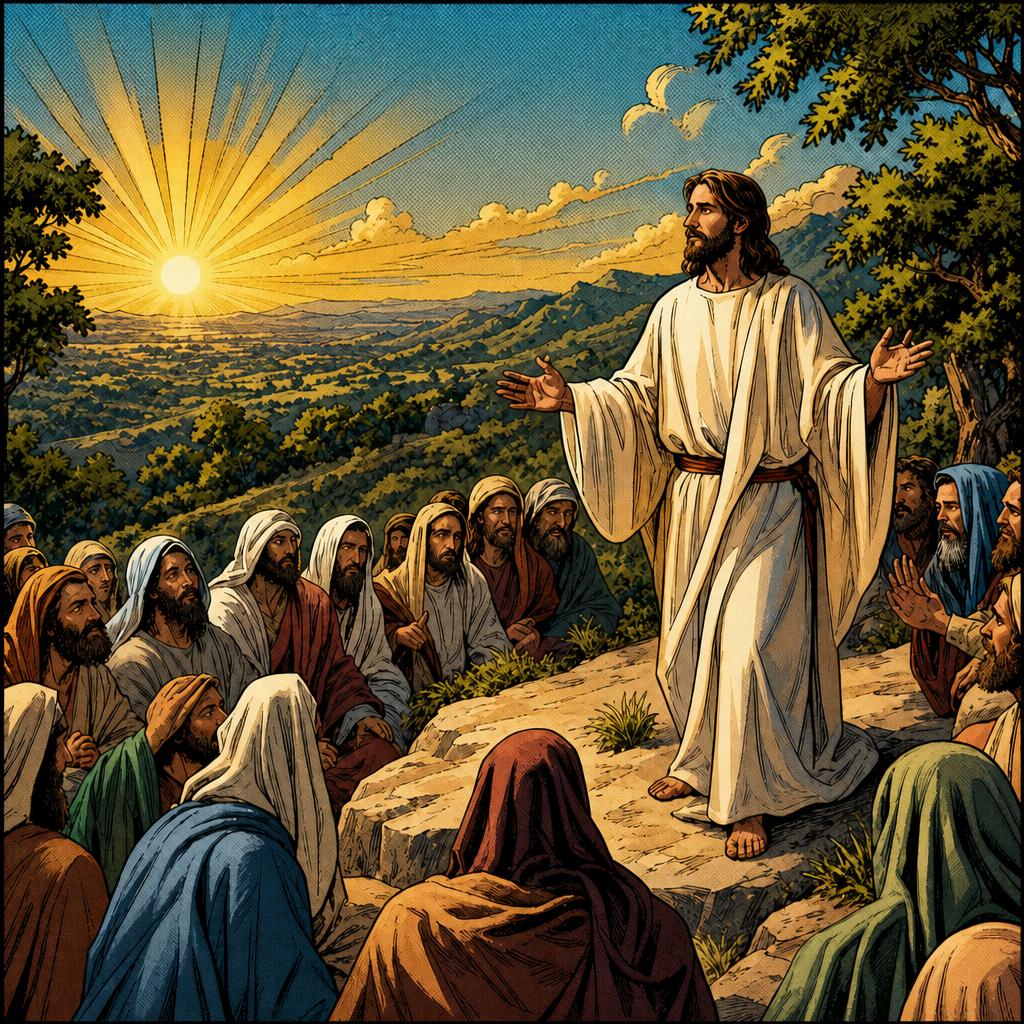
People often wonder, “What’s the right denomination?” With hundreds, if not thousands, of denominations out there, each claiming to be the one true church, it raises an important question: Does God recognize any of these as His representatives here on earth? It’s a topic worth exploring with both prayer and honesty. If there was just one church established by our Lord in the beginning, it stands to reason there should be only one church at the end—the glorious, triumphant church. (Colossians 3:4)
The term “church” first popped up in the New Testament, translating the Greek word ekklesia, which means “a calling out.” Jesus told His disciples, “I have chosen you out of the world.” (John 15:19) So, what is the true church? It’s a community of believers who have accepted Christ’s invitation, setting themselves apart from worldly distractions and pursuits.
In the early church, believers didn’t go by denominational names; instead, they were identified by where they lived. For example, Paul wrote to “the church of God which is at Corinth… sanctified in Christ Jesus, called to be saints…” (1 Corinthians 1:2). These dedicated individuals in various communities made a conscious choice to separate themselves from the world and devote their lives to God through the grace of His Son.
So, here’s the thing: the church isn’t just a building you attend or a label you wear. It’s the gathering of genuine believers. Paul made it clear that Jesus’ followers were baptized only into Christ, not into any earthly organization. There’s just one baptism, and that’s into Christ. So, it’s a bit of a misunderstanding to think you join or get baptized into a specific church denomination. (Ephesians 4:4-6; Galatians 3:27; Romans 6:3, 4)
The Early Church, A Template
When Christ first set up the early church through the Apostles, things were pretty straightforward. There were no fancy ceremonies, towering marble columns, or elaborate choir lofts filled with expensive statues. Instead, you’d find small groups of his followers gathering in cozy homes, diving into his teachings and the inspired messages from the Apostles. Their example of “the simplicity that is in Christ” was meant to serve as a model for how future church gatherings would take shape throughout the Christian Age (2 Corinthians 11:2, 3).
At the heart of these early church gatherings were two key components: 1) the congregation—people who had committed their lives to following God’s will and walking in Jesus’ footsteps; and 2) the under-shepherds—men chosen by the congregation to tend to the spiritual needs of the church. As it says in Acts 14:23, “they had ordained them elders in every church.” Now, today, when we hear the word “ordain,” we often think of a formal installation ceremony by a religious group. But the original Greek word, cheirotoneo, simply means to elect by raising a hand. (You can also check out 2 Corinthians 8:19 for more on this.)
So, the church was designed to let the congregation vote for leaders who embodied qualities like faithfulness, humility, diligence, good behavior, and patience (1 Timothy 3:1-7). This approach not only empowered the community but also acted as a safeguard against the rise of an overpowering clergy class. It was all about keeping things balanced and ensuring that everyone had a voice!
For a while, the church enjoyed a sense of independence, free from any specific sectarian ties. But before long, some of Christ’s followers started to identify themselves more by the names of their teachers than by where they lived. We see this in the Apostle Paul’s letter to the Corinthians, where he writes, “For it hath been declared unto me of you… that there are contentions among you… every one of you saith, I am of Paul; and I of Apollos; and I of Cephas; and I of Christ. Is Christ divided? Was Paul crucified for you? Or were you baptized in the name of Paul?” (1 Corinthians 1:11-13).
Paul was really trying to remind his fellow believers not to fall into the trap of division. He urged them to avoid the kind of bondage that could come from aligning themselves with anything other than the unity that comes from the mind of Christ. He encouraged them, “Let nothing be done through strife or vainglory… Let this mind be in you, which was also in Christ Jesus…” (Philippians 2:3-5). It’s a powerful call to focus on what truly matters—staying united in faith and purpose.
“Is Christ Divided?”
This question posed by the Apostle Paul serves as a powerful reminder of the challenges faced within the church. He often cautioned that ambitious individuals would rise up, trying to pull followers toward themselves rather than toward Christ. He warned, “I know that after I’m gone, fierce wolves will come in among you, not sparing the flock. Even from your own ranks, some will arise and twist the truth to draw disciples after themselves. So, keep watch! I spent three years warning you night and day, often with tears in my eyes.” (Acts 20:29-31)
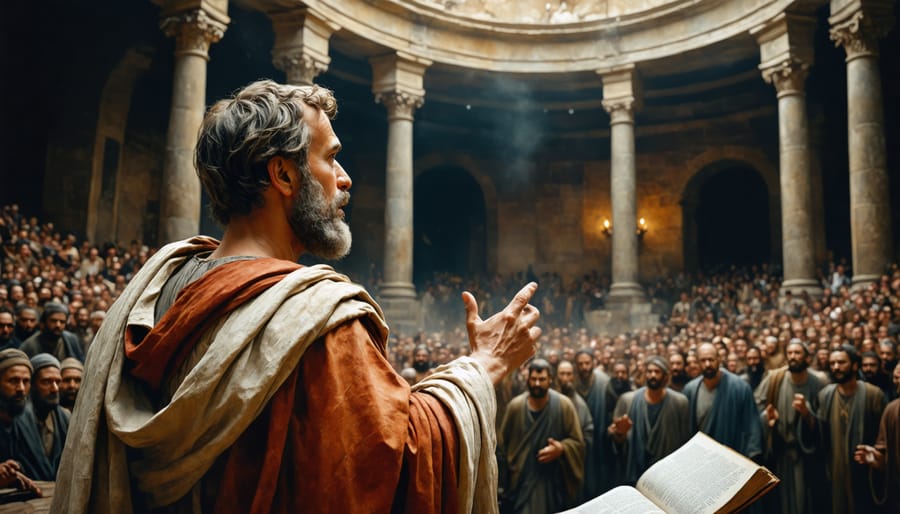
These “fierce wolves” stirred up conflict, causing small groups to splinter into factions. Paul referred to this troubling state as carnal-mindedness. He pointed out, “You’re still acting like mere humans! Look at the envy, strife, and divisions among you. Isn’t that a sign of your immaturity?” (1 Corinthians 3:3)
This spirit of discord was undoubtedly a test for the early church. Paul believed that those who were truly approved by God would rise above such worldly behavior. He noted, “When you gather as a church, I hear there are divisions among you, and I partly believe it. There must be factions among you so that those who are genuine can be recognized.” (1 Corinthians 11:18, 19)
In a way, God allowed these divisions to occur to strengthen the character of the faithful—those who would stand firm for truth and righteousness, even when faced with misleading teachings and practices.
Over time, as different groups tried to stick together, they started to rely on rules, rituals, and mandatory holy days. The Apostle Paul wasn’t a fan of this shift; he saw these practices as just empty gestures of faith. He asked, “Why are you letting yourself be bound by rules like ‘don’t touch, don’t taste, don’t handle’—all based on human commands and teachings? Sure, they might look wise on the surface, but they’re really just a facade” (Colossians 2:20-23; 2 Timothy 3:5). In fact, he went so far as to call these unnecessary rules “doctrines of demons,” warning that in the future, some would stray from their faith, lured by misleading spirits and false teachings. He pointed out the absurdity of forbidding marriage and telling people what they can or can’t eat (1 Timothy 4:1-3).
As Paul noticed some misleading teachings sneaking into the early church, he made it a point to focus on the incredible freedom we have in Christ. He urged everyone to “stand firm in the freedom that Christ has given us, and don’t get caught up again in a heavy burden of rules” (Galatians 5:1). He also reminded folks that it’s perfectly fine to have different opinions about special days: “Some people consider one day more important than another, while others see every day as the same. What matters is that each person is convinced in their own heart” (Romans 14:5).
Now, let’s talk about the head of the church—Christ. He’s the one we need to recognize as our Savior and the leader of the church. As it says in 1 Corinthians 12:27, “Now ye are the body of Christ, and members in particular.” This beautiful metaphor of the head and body is further explained in 1 Corinthians 11:3: “I would have you know, that the head of every man is Christ; and the head of the woman is the man; and the head of Christ is God.” Just like the head thinks for the whole body, that’s how it works in the true church.
As members of Christ’s body, we should aim for unity by embracing the mind of Christ. When we do this, we’ll foster a genuine love and concern for one another. Remember, “One is your Master, even Christ; and all ye are brethren” (Matthew 23:8). No one should have a higher status in the body that allows them to dominate others (1 Peter 5:3). In the true church, there won’t be any class distinctions between clergy and laity. Sure, there will be teachers and pastors, but they’re here to serve the flock, not to rule over it, because we all have one Master and example—Christ.
“Ye call me Master and Lord: and ye say well; for so I am. If I then, your Lord and Master, have washed your feet; ye also ought to wash one another’s feet. For I have given you an example, that ye should do as I have done to you.” (John 13:13-15) Christ’s example was that of a lowly shepherd, and, although he had every right to do so, he did not demand high honors or to be robed in velvet and driven around in splendid carriages, or to live in a royal palace. No, his example was that of a servant, washing the feet of his disciples. Matthew 11:29
In a beautiful metaphor, Christ is depicted as the bridegroom, with the church as his cherished bride. The scripture reminds us, “Husbands, love your wives, just as Christ loved the church and gave himself up for her. He did this to make her holy, cleansing her by the washing with water through the word, and to present her to himself as a radiant church, without stain or wrinkle or any other blemish…” (Ephesians 5:25-26). This imagery highlights the unique bond between Christ and the one true church, which is committed to Him alone (2 Corinthians 11:2). The church has promised her Lord that she will steer clear of spiritual infidelity, refusing to align herself with worldly influences or governments. Because of this commitment, Jesus was widely recognized as the head of the early church.
Following in His footsteps were the twelve devoted Apostles, who were entrusted with the special authority to speak and write under the inspiration of God’s Holy Spirit. The Apostle Paul emphasized that the Lord also provided other leaders within the church to guide and support their fellow members. “And he gave some to be Apostles, some to be prophets, some to be evangelists, and some to be pastors and teachers, to equip the saints for the work of ministry, and to build up the body of Christ…” (Ephesians 4:11-12). Each group was given the freedom to decide how best to choose their leaders, all while being united by love and respect for one another, working together like a family. You can find more about this in Romans 12:10, Hebrews 10:23-25, Titus 1:5, and 1 Timothy 3:1-7.
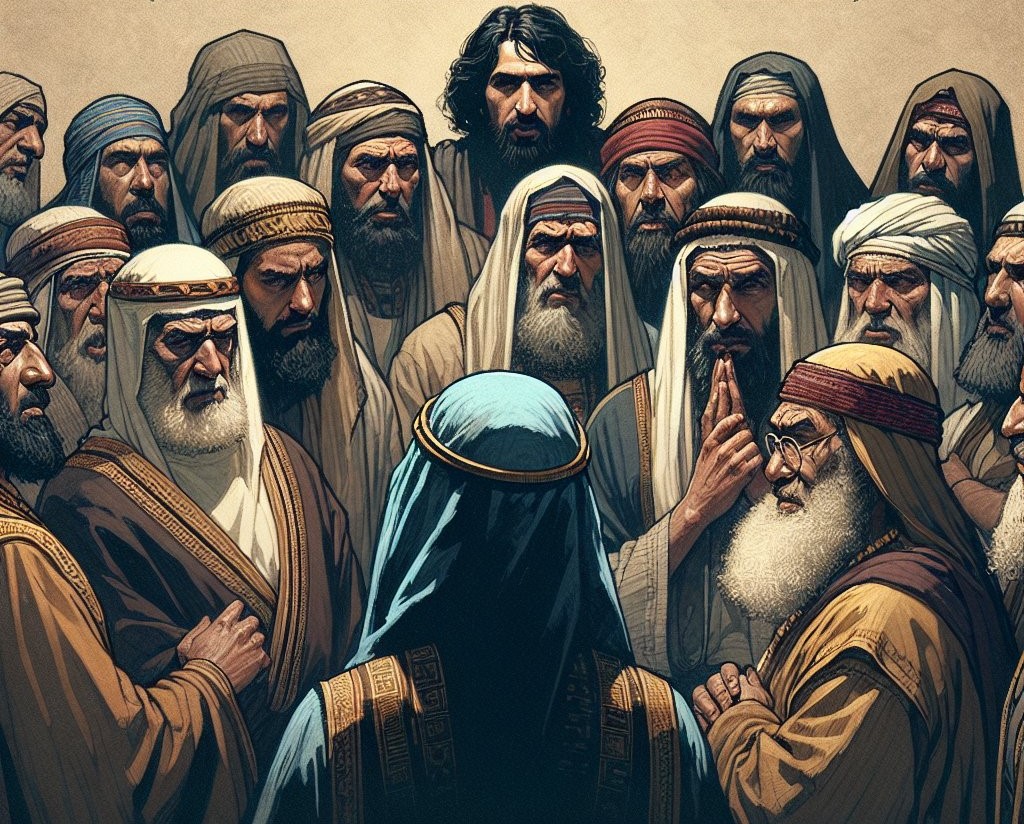
“Beware the Leaven of the Pharisees” – that’s a pretty powerful warning from Matthew 16:6-12. Our Lord was pointing out the dangers of pride that can creep into our hearts, much like leaven in bread. He highlighted how the Pharisees would load people down with burdens that they themselves wouldn’t even lift a finger to help with. It’s like they were all about appearances, making their phylacteries extra large and their garments flashy, just to get the admiration of others. They loved being called “Rabbi” and basked in the titles. But Jesus had a different message for us: don’t go around calling anyone “Rabbi” or “Father” in a way that puts them above others. After all, we’re all brothers and sisters, and our true Master is Christ. The greatest among us? Well, they should be the ones serving others.
The true church has taken this warning to heart and embraced it with joy.
Yet, as we look back over the past nineteen centuries, it’s hard not to notice how the spirit of pride has built up high walls between different sects, creating a world filled with clashing beliefs. Can you imagine how these divisions must look to God? It raises the question: why would He allow the church to get tangled up in such unholy forms of religion?
The true church, despite facing countless challenges, held on to its faith. For centuries, it was trapped under the weight of misleading teachings from a powerful false system. The Apostle John referred to this system as Babylon the Great, the Mother of Harlots, while the true church was lovingly described as a chaste virgin, betrothed to her bridegroom (Revelation 17:5; 2 Corinthians 11:2). Babylon represents confusion, and the Church of Rome replaced the words of Christ and the Apostles with creeds, rituals, and traditions that strayed from the original message.
Yet, amid all this chaos, a small group of Christ’s followers remained steadfast. They often faced persecution for clinging to the bits of truth they cherished. To them, these truths were like the comforting voice of their shepherd, reminding them that they were never alone. As it says, “My sheep hear my voice, and I know them, and they follow me. And I give unto them eternal life…” (Hebrews 13:5; John 10:27, 28).
“Come Out from Among Them”
“What agreement does the temple of God have with idols? You are the temple of the living God; as God has said, ‘I will dwell in them and walk among them; I will be their God, and they shall be my people.’ So, come out from among them and be separate, says the Lord. Touch no unclean thing, and I will receive you…” (2 Corinthians 6:16, 17).
It’s time for all of us who identify with this pure and devoted community to come together in true unity. We shouldn’t let ourselves be divided into different groups and factions by rigid beliefs. As Revelation 18:23 reminds us, “the light of a candle shall shine no more at all in thee; and the voice of the bridegroom and of the bride shall be heard no more at all in thee…” We’re living in the final days when these misguided religious systems are facing judgment. It’s a call to action: “Come out of her, My people, that ye be not partakers of her sins and that ye receive not of her plagues.” (Revelation 18:4) These plagues represent the troubles facing the false church, meant to encourage those who are sincere but hesitant to make a change.
It’s time for the faithful to unite around the teachings of God’s Word, embracing the freedom that Christ has given us from all human constraints and divisions. Let’s celebrate this liberty together!
This is going to be a tough journey for the Lord’s people as they strive to break free from the chains of misunderstanding and denominational divides. But you know what? This challenge is exactly what they need to prove they’re “more than conquerors.” After all, those who rise to this occasion will be the ones who make up the bride of Christ.
In the past, standing up for one’s faith often took a lot of guts, especially when it meant facing harsh persecution. Thankfully, we’re not living in times where people fear being thrown to the lions or burned at the stake for their beliefs. However, the Bible still reminds us that “All who desire to live godly in Christ Jesus will suffer persecution” (2 Timothy 3:12).
These days, the challenges for Christians might be more subtle, but they’re no less real. If someone dares to challenge traditions, question errors, or push back against human philosophies in their worship, they might be labeled as extremists. They’re often told that these beliefs have always been part of the fabric of faith, and that it’s easier to just go along with what the clergy presents. Unfortunately, many people end up buying into this argument and conforming to church doctrines and society’s ever-changing views on morality.
But the true church? They’re not backing down. They’ll take a hard look at their beliefs and stand firm for what’s right, no matter the cost. Their commitment to truth and righteousness runs deep, inspired by Jesus, who loved what is right and stood against wrongdoing (Hebrews 1:9).
The true church of Christ, inspired by genuine faith and the teachings of the Bible, is united by love, just as Jesus prayed, “that they all may be one” (John 17:21). This church doesn’t need strict rules to keep its members united in spirit and belief. As Jesus said, “You shall know the truth, and the truth shall make you free.”
The key to this unity lies in the heartfelt devotion of each member to God and His service. These individuals, touched by the Holy Spirit, are eager to understand His righteous will and Word. However, those who choose to step away from popular denominations may find themselves part of a smaller group, as Jesus noted. This little flock may be small compared to the larger sects, but they will shine brightly in the world.
There is only one flock, scattered across the globe, but as the Scriptures remind us, “The Lord knows those who are His” and will gather them to Himself (Luke 12:32; 2 Timothy 2:19; Malachi 3:17).
Where Eagles Gather
If we find ourselves called to break free from sectarian chains, where do we turn? The one true church has always been wherever two or more come together in Jesus’ name (Matthew 18:20). And today, even if it’s just one person, we can still connect with others through mail, phone calls, or online studies. As we draw closer to the Father, He draws closer to us, guiding us through His Holy Spirit to others who share our precious faith. “For wherever the carcass is [the truth of Jesus’ incredible sacrifice], there will the eagles be gathered together” (Matthew 24:28).
We don’t gather around figures like Calvin, Luther, Wesley, Paul, Apollos, or Peter. Instead, we heed the divine call: “Gather my saints together unto me; those that have made a covenant with me by sacrifice” (Psalm 50:5). Our purpose is simple: to share our love for God, His Son, His truth, and His children. Stepping out in faith, trusting that “God shall supply all your need, according to His riches in glory by Christ Jesus,” each of us is called to take personal responsibility and seek His guidance. As Philippians 2:12 reminds us, we’re to “work out your own salvation with fear and trembling,” knowing He’s got our backs (Philippians 4:19).
With faith that God will lead us to others who share our precious beliefs, let’s keep diving into His Word. We aim to reach “the unity of the faith… so that we’re no longer children, tossed to and fro, carried about by every wind of doctrine, by the sleight of men and their cunning craftiness.” Instead, let’s “speak the truth in love” and grow into Him in all things, who is the head—Christ. From Him, the whole body is fitly joined together, growing and building itself up in love (Ephesians 4:13-16).
WHO ARE THE BIBLE STUDENTS?
Since the 1870s, Bible students around the globe have been coming together to celebrate the freedom that we find in Christ. We operate independently, with each small congregation structured on its own, yet we work hand in hand in our quest for God’s truth. Our meetings are reminiscent of the early church, filled with prayer, praise, and in-depth Bible study, all aimed at uncovering the wisdom of God’s Word. We’re not here to promote ourselves; our focus is solely on Christ. We don’t make up rules or create creeds, and we certainly don’t take away anyone’s freedom in Christ. Instead, we let the Word of the Lord—through the Apostles and prophets—speak for itself. We don’t boast or claim anything for ourselves; we simply aim to serve the Lord and His flock to the best of our abilities. There are no tithes, no seeking of accolades, no demands for authority, and no compensation involved; our only hope is to share in the love of the Lord and connect with all His children filled with His Spirit.
We’re not trying to start a new sect; in fact, we steer clear of all sectarian systems and their claims of authority. We embrace the idea of “one Lord, one faith, and one baptism” as laid out in Scripture, and we welcome anyone who professes faith in the “redemption through the blood of Christ” as our fellow brethren. We recognize the true church as anyone who has fully consecrated themselves to the Lord, His will, and His service—no matter where they are.
While we all operate independently, Bible student groups share a deep respect for the Lord and His truth with fellow believers everywhere. One of our missions is to send out literature that encourages other Bible students in their studies and shares the peace and joy we’ve discovered through our research.
If you’re interested, our Catalog of Publications showcases a variety of books, booklets, and videos created not just by our local group, but also by other Bible student groups around the world. These resources are a product of our collaborative Bible studies.
Best of all, you can review and download all of our publications for free on our website: KINGDOMHERALD.COM.
I’m enjoying you YouTube channel. I’m a PIMO JW.